
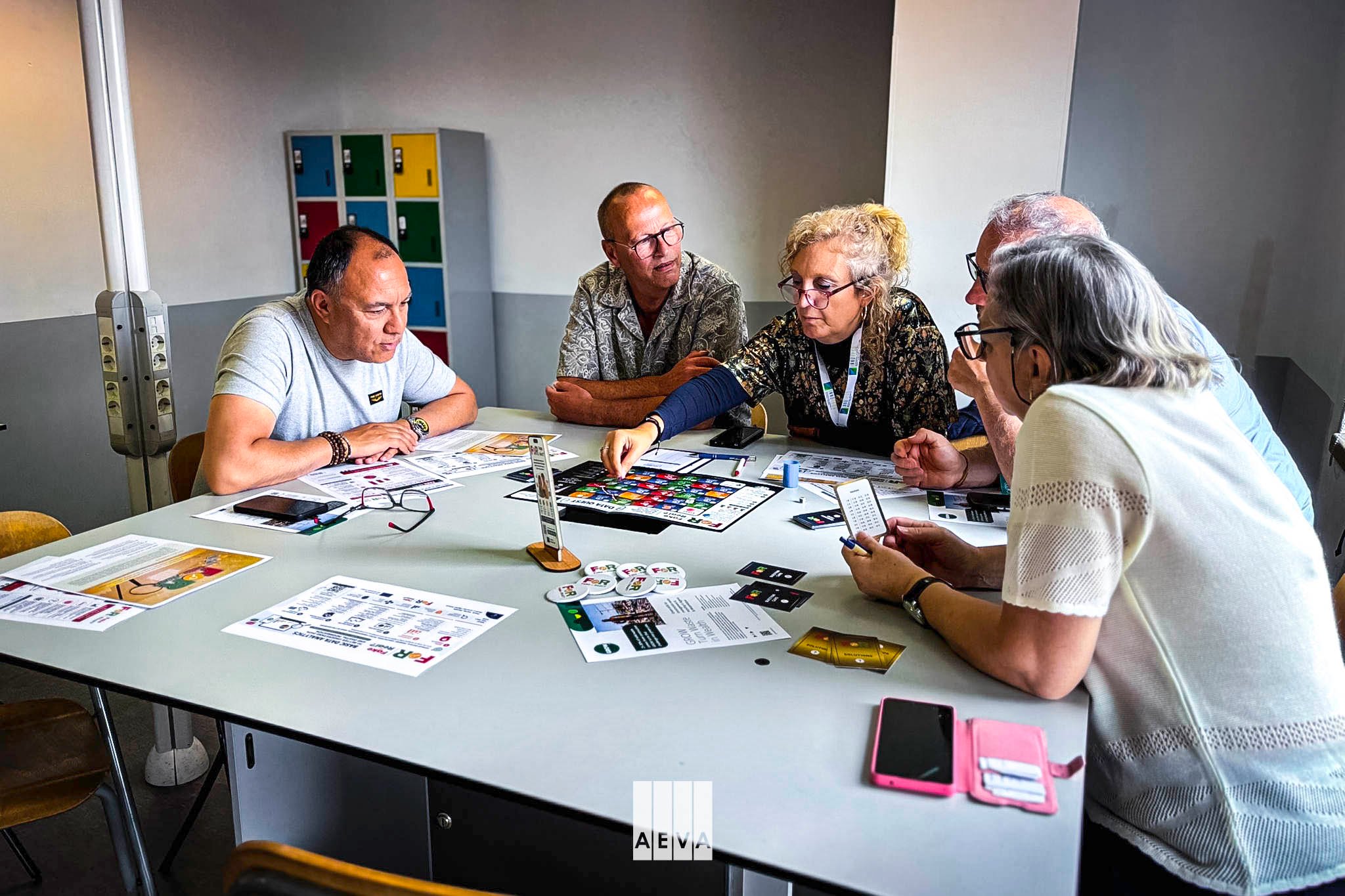
Representatives from GROW Project coordinator Mínimos Quadrados (MQ), Isabel Gonçalves and João d’Orey, attended the International Network of Technical Schools (INNOTECS) Annual Conference for Vocational Schools, held in Aveiro, Portugal, from 17 to 19 May 2026. The three-day event brought together 76 participants from 11 countries, reaffirming INNOTECS’s standing as a leading international forum for dialogue on vocational education and training (VET) and secondary education.
As an active member of the INNOTECS network, MQ led a roundtable discussion, during which it took the opportunity to present the GROW project to participants. GROW was introduced to a diverse audience, with project brochures distributed and its core objectives presented to 23 participants. These centred on building capacity within vocational schools, equipping teachers and students with competences in the circular economy and sustainability with a particular focus on construction and demolition waste (CDW) management in Africa.
The session equally served as a platform for exchanging insights with representatives from other VET projects across the participating countries. Dialogue with institutions including Deltion College (Netherlands), TISM (Belgium), Salpaus Further Education (Finland), and partners from Germany, Italy, Spain, Portugal, and the United Kingdom enriched the consortium’s understanding of emerging practices and challenges in the sector. These perspectives from European vocational education providers are expected to inform the design and delivery of GROW’s forthcoming training activities in Nigeria and Mozambique.
Participants acknowledged both the significance of the project and the relevance of CDW management as a curriculum topic, with several noting that related themes are already embedded in courses at their institutions, an encouraging indication of shared ground and potential for knowledge exchange.
MQ’s active engagement within the INNOTECS community continues to strengthen GROW’s visibility across European VET circles, whilst advancing the project’s broader ambition of embedding sustainability competences within technical and vocational education systems worldwide.